
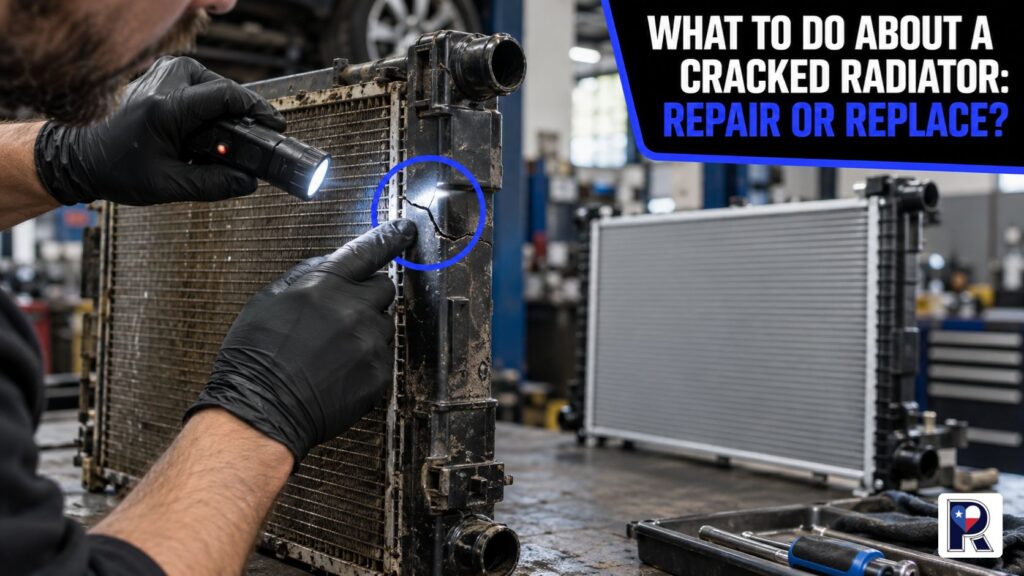
A cracked radiator does not automatically need to be replaced. A small, localized crack in an otherwise sound radiator may be repairable, while widespread corrosion, multiple leaks, brittle tanks, or a failed pressure test usually point to replacement or rebuilding.
Do not keep driving or operating equipment if coolant is disappearing, the temperature is rising, or steam is coming from the cooling system. A radiator problem can quickly become an engine, transmission, or equipment failure if the system cannot control heat.
What causes a radiator to crack?
Radiators work through repeated heating, cooling, vibration, and pressure changes. Over time, those conditions can weaken tanks, seams, tubes, and mounting points.
Common causes include:
- Age-related corrosion
- Thermal stress from repeated temperature changes
- Impact from road debris or a collision
- Vibration from trucks, machinery, or loose mounts
- Low coolant levels and repeated overheating
- Contaminated or poorly maintained coolant
- Electrolysis inside the cooling system
- Excessive pressure from a faulty cap or another cooling-system problem
On heavy-duty and industrial equipment, dust, vibration, long operating hours, and high loads can make a small cooling-system weakness more serious.
What are the signs of a cracked radiator?
A visible crack is one warning sign, but leaks are not always easy to see. Coolant may evaporate on a hot engine, collect behind a shroud, or leak only when the system reaches operating pressure.
Look for:
- Coolant under the vehicle or equipment
- A sweet coolant odor after operation
- White, green, pink, yellow, or orange residue near the radiator
- A temperature gauge that keeps climbing
- Steam from the radiator area
- Low coolant levels that return after filling
- Repeated overheating under load
- Bubbling or pressure problems in the coolant reservoir
- Wetness around plastic tanks, seams, fittings, or drain plugs
A leaking hose, water pump, thermostat housing, heater core, oil cooler, or head gasket can create similar symptoms. That is why replacing the radiator based only on a puddle or an overheating gauge can lead to the wrong repair.
Is it safe to drive with a cracked radiator?
Usually, no. If the crack is losing coolant or the engine is overheating, driving can cause severe damage in a short time.
Pull over safely, turn the engine off, and allow it to cool before checking anything. Never remove a radiator cap while the system is hot because pressurized coolant can cause serious burns.
If the leak is minor and the temperature remains stable, a short trip to a repair facility may sometimes be possible, but towing is the safer choice when coolant loss or overheating is present.
In short: A cracked radiator should be inspected before the vehicle or equipment returns to work. Continuing to operate it is a gamble that can turn a cooling-system repair into a much larger mechanical failure.
Can a cracked radiator be repaired?
Yes, but the answer depends on the radiator’s material, crack location, overall condition, and intended use.
A professional may recommend repair when:
- The damage is limited to one accessible area
- The tanks and core are structurally sound
- Corrosion is not widespread
- The radiator can hold pressure after repair
- The repair will withstand normal heat and vibration
- Replacement is difficult because the unit is specialized or obsolete
Metal radiators, especially some copper-brass and heavy-duty designs, may be suitable for soldering, brazing, tube repair, or recoring. Some industrial radiators can also be rebuilt when the frame, tanks, and other major components remain usable.
A plastic tank crack may have fewer reliable repair options. A specialist might replace the tank or core, but a new radiator is often more practical when the plastic is brittle or other areas are beginning to fail.
Household epoxy or stop-leak products should not be treated as a proper solution for a fleet truck, diesel vehicle, frac unit, excavator, or other equipment that must operate under heat and pressure. They may hide the symptom while the underlying damage continues.
When should a radiator be replaced?
Replacement is generally the safer choice when the radiator has damage that is too extensive, too difficult to repair, or unlikely to hold under operating conditions.
Replacement may make more sense when:
- The radiator has several cracks or leaks
- The core is heavily corroded or blocked
- The plastic tanks are brittle or distorted
- The radiator has been repaired more than once
- The mounting points or frame are damaged
- The unit cannot hold pressure after repair
- The radiator caused repeated overheating
- The correct replacement is available and reasonably timed
- Repair labor approaches the value of a dependable replacement
- The vehicle or equipment cannot risk another failure
For a commercial fleet or industrial operation, the decision is not only about the part price. A failed repair can mean another removal, another coolant flush, towing, missed work, and extended downtime.
In short: Replace a radiator when its basic structure is failing, not just because one leak is visible. A professional inspection helps separate a repairable defect from a unit that has reached the end of its service life.
Repair or replacement: how do you decide?
Condition found during inspection | More likely option | Reason |
One small leak, sound core, little corrosion | Repair | The damage may be localized and testable |
Cracked solder joint or fitting | Repair | The affected area may be restored without replacing the complete unit |
Damaged tube with a serviceable radiator | Repair or recore | A specialist can assess tube and core condition |
Multiple leaks across the core | Replace or rebuild | Several leaks often indicate broader deterioration |
Brittle, swollen, or distorted plastic tanks | Replace | Additional tank failure may be close behind |
Severe corrosion or blocked passages | Replace or recore | Cleaning alone may not restore heat transfer |
Bent frame or damaged mounting points | Replace or rebuild | The unit may not sit securely or seal correctly |
Repeated overheating after prior repairs | Replace or deeper diagnosis | The radiator may not be the only cause |
Specialized industrial unit with limited availability | Rebuild or recore | Rebuilding may reduce procurement and downtime issues |
The right choice should come after removing or accessing the radiator as needed, identifying the leak, and testing the unit under controlled conditions.
What does a proper radiator inspection include?
A useful inspection looks beyond the visible crack. At Permian Radiator, the evaluation may include:
- Visual inspection: Checking tanks, seams, tubes, fins, fittings, mounts, hoses, and nearby components.
- Pressure testing: Applying controlled pressure to find leaks that may not appear during a basic visual check.
- Condition review: Looking for corrosion, blocked passages, bent fins, contamination, and evidence of previous repairs.
- Cooling-system check: Confirming whether the thermostat, fan, water pump, cap, hoses, or other components may have contributed to overheating.
- Cleaning or flushing: Removing dirt, scale, oil, or contaminated coolant when cleaning is appropriate.
- Repair, rebuild, or replacement recommendation: Matching the solution to the radiator’s condition and the equipment’s operating demands.
- Post-service testing: Checking for leaks and confirming that the repaired or replaced unit is ready to return to service.
A pressure test matters because a radiator can look acceptable when cold and still leak once temperature and pressure rise.
In short: The goal is not simply to stop one leak. The goal is to restore reliable heat transfer and prevent the same failure from sending the vehicle or equipment back into the shop.
What about heavy-duty and industrial radiators?
A passenger-vehicle radiator and an industrial cooling unit should not be judged by exactly the same standards.
Heavy-duty trucks, semis, construction equipment, agricultural machinery, frac equipment, and oilfield systems often operate under heavier loads and harsher conditions. Their radiators may also work alongside charge-air coolers, hydraulic oil coolers, lube oil coolers, or transmission fluid coolers.
If one cooler is damaged, another component may still be contributing to overheating or fluid contamination. A complete inspection can help identify whether the problem is limited to the radiator or part of a larger cooling-system failure.
For fleet owners and maintenance supervisors, the practical question is often:
- Can this unit be repaired reliably?
- How quickly can it return to service?
- Is rebuilding more sensible than sourcing a replacement?
- Could a blocked or leaking cooler damage another system?
- What maintenance should prevent the next failure?
Permian Radiator serves San Angelo and the wider Permian Basin with commercial radiator repair, heavy-duty radiator repair, automotive radiator work, radiator rebuilding, and related cooler services.
How can you reduce the chance of another radiator failure?
No maintenance plan can prevent every failure, but several habits can catch problems earlier:
- Check coolant levels and condition according to the equipment manufacturer’s instructions.
- Inspect hoses, clamps, mounts, and belts during scheduled maintenance.
- Keep radiator fins and surrounding airflow paths free of dirt and debris.
- Investigate even minor coolant loss instead of repeatedly topping off the system.
- Use the correct coolant and follow the recommended mixing instructions.
- Pressure-test the system after overheating or a major cooling-system repair.
- Record recurring temperature problems across fleet vehicles and equipment.
- Have oil coolers and transmission coolers checked when contamination or abnormal temperatures appear.
A radiator that is cleaned, tested, and maintained regularly is easier to evaluate when a problem first appears.
Frequently Asked Questions
Sometimes. A localized crack in a structurally sound radiator may be repaired, soldered, brazed, or addressed through a rebuild. Extensive corrosion, multiple leaks, brittle tanks, or poor pressure-test results usually make replacement more appropriate.
It can be. A small crack may expand as the radiator heats, cools, and vibrates. If coolant loss causes overheating, the resulting engine or equipment damage can be far more serious than the original leak.
Coolant residue may appear around a hose, clamp, tank, seam, fitting, or radiator core. A professional radiator pressure test can help locate leaks that are difficult to see when the system is cold.
Repair may cost less when the damage is isolated and the radiator is otherwise sound. Replacement or rebuilding may be more sensible when corrosion, repeated leaks, or structural damage make another repair unlikely to last.
Stop-leak products may provide temporary assistance in limited situations, but they should not replace diagnosis and proper repair. They are especially unsuitable as a long-term plan for heavily used trucks, fleets, and industrial equipment without professional evaluation.
Shut it down safely, keep people away from hot pressurized coolant, and allow the system to cool. Do not continue operating the equipment simply because it starts again after adding coolant. Arrange an inspection before returning it to regular duty.
It can, depending on the equipment and symptoms. Commercial and industrial systems may include hydraulic, lube oil, or transmission fluid coolers that also need inspection when temperatures, leaks, or fluid contamination are present.
Conclusion
The right answer to a cracked radiator is not always “repair” or always “replace.” The decision should be based on the crack’s location, the radiator’s material, corrosion level, pressure-test results, repair history, and the demands placed on the vehicle or equipment.
If you are dealing with a coolant leak, overheating, or a damaged radiator in San Angelo, contact Permian Radiator for an inspection and a clear recommendation. The team handles automotive, commercial, industrial, and heavy-duty cooling systems, including radiator repair, radiator replacement, radiator rebuilding, and related oil cooler services.
Call Permian Radiator or request a free quote before a small cooling-system problem creates expensive downtime.


 ICONIER Digital Marketing Agency