
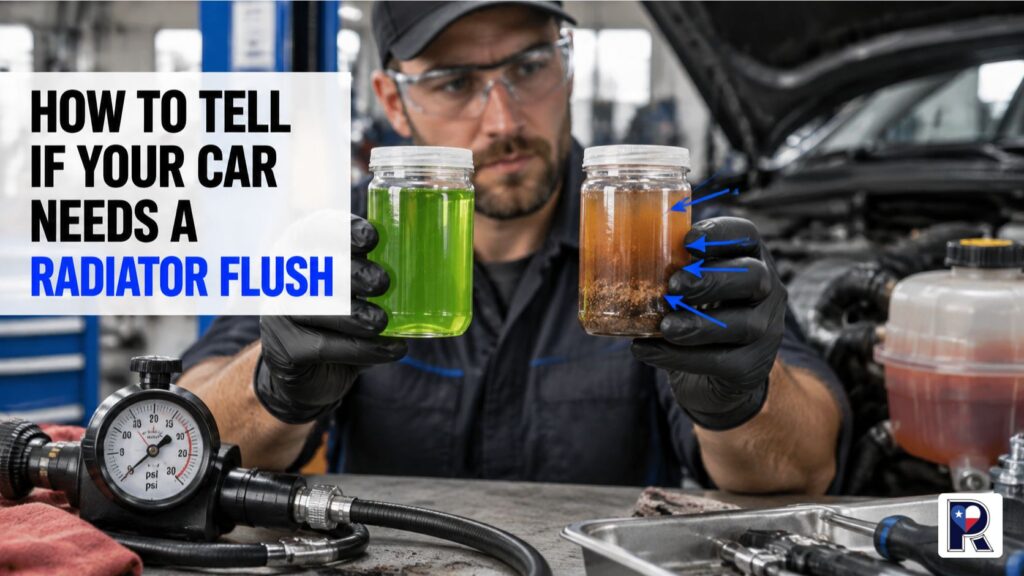
Your car may need a radiator flush if the coolant is dirty, rusty, sludgy, overdue for service, or no longer controlling engine temperature properly. Rising temperature readings, weak cabin heat, visible debris, and an unknown coolant history are also reasons to have the system inspected.
A flush is not the answer to every cooling problem. If coolant is leaking, the radiator is cracked, or the water pump, thermostat, fan, or head gasket has failed, the damaged component must be repaired before fresh coolant can solve anything.
What does a radiator flush do?
A coolant flush removes old fluid and contaminants from the radiator, engine passages, heater core, hoses, and other parts of the cooling system. The system is then refilled with the coolant type and mixture specified for the vehicle.
Coolant does more than keep the engine from running hot. It also helps prevent freezing, corrosion, scale, and damage inside metal cooling passages.
As coolant ages, its protective additives break down. Dirt, rust, incompatible fluid, minerals, and debris may also collect in the system.
Is flushing different from topping off the coolant?
Yes. Topping off only raises the fluid level. It does not remove degraded coolant or contaminants already circulating through the system.
A simple drain-and-fill replaces some of the coolant. A complete flush aims to remove more of the old fluid and accumulated contamination before the system is refilled.
In short: A flush replaces contaminated or degraded coolant. It does not repair damaged cooling-system parts.
Seven signs you need a radiator flush
1. The coolant looks rusty, brown, cloudy, or sludgy
Healthy coolant should look reasonably clean and consistent. Its exact color depends on the vehicle specification, so green is not the only normal color.
Discolored coolant may indicate rust, degraded additives, mixed coolant types, oil contamination, or debris inside the system. A technician should identify the cause before flushing.
Thick sludge requires particular attention. Simply replacing the fluid may not remove deposits from narrow passages in the radiator or heater core.
2. The temperature gauge runs higher than normal
A temperature gauge that gradually rises or moves more than usual can point to restricted coolant flow or poor heat transfer.
Old or contaminated fluid may contribute, but engine overheating has many possible causes:
- Low coolant
- A leaking hose or radiator
- Failed thermostat
- Damaged water pump
- Inoperative cooling fan
- Blocked radiator
- Trapped air
- Internal engine problem
Do not assume that a flush will solve overheating. If the temperature reaches the warning zone, stop the vehicle safely and shut off the engine.
3. You see rust, scale, or debris in the reservoir
Visible particles in the coolant reservoir suggest that material is circulating through the system. Rust may come from internal corrosion, while scale can form when the wrong water or coolant mixture has been used.
A cooling system inspection can determine whether professional radiator cleaning is enough or whether a restricted or corroded component needs repair.
4. The cabin heater is not working normally
The heater core uses hot engine coolant to warm the air inside the car. Restricted flow or trapped air can cause the heater to blow cool, alternate between warm and cold, or provide less heat than it used to.
A flush may help if sediment is limiting flow through the heater core. A low coolant level, blend-door problem, thermostat issue, or leaking heater core can create similar symptoms.
5. You do not know when the coolant was last serviced
An unknown service history is a reasonable reason to inspect the coolant. This is common with recently purchased used vehicles or cars that have changed owners several times.
Do not choose a generic mileage interval from the internet. Coolant types and service schedules vary widely, so the owner’s manual or manufacturer’s service information should guide the decision.
6. The coolant has been mixed or repeatedly topped off with water
Mixing incompatible coolant formulas can create deposits or reduce corrosion protection. Repeatedly adding ordinary tap water may also introduce minerals.
If the wrong fluid was added, flushing may be appropriate. The system should be refilled with the exact coolant specification and mixture required for the vehicle.
7. The cooling system was opened for a major repair
A flush or coolant replacement may be sensible after certain radiator, water pump, hose, thermostat, or engine repairs. This depends on the coolant’s condition and whether contamination entered the system during the work.
Fresh coolant should not be added until any active leak or failed component has been addressed.
In short: The strongest signs you need a radiator flush are contaminated coolant, visible deposits, overdue service, mixed fluids, and restricted circulation. Overheating and coolant loss require diagnosis first.
What signs point to a leak instead of a flush?
A flush cannot stop coolant from escaping. Look for signs of a coolant leak, including:
- A puddle beneath the vehicle
- Wet areas around hoses or the radiator
- Dried white or colored residue near connections
- A sweet odor from the engine area
- Steam under the hood
- Repeatedly low coolant
- Coolant warning lights
- Visible cracks in a tank or hose
A low coolant level is not proof that the fluid needs to be flushed. Coolant does not normally disappear quickly from a sealed, healthy system.
If the level continues dropping, the system should be checked for an external or internal leak. Refilling it repeatedly without finding the cause only delays the repair.
Radiator flush versus drain-and-fill
Service | What it does | When it may be appropriate |
Coolant top-off | Adds fluid without removing the old coolant | Minor level adjustment after confirming there is no leak |
Drain-and-fill | Drains accessible coolant and adds fresh fluid | Routine service when the existing coolant is relatively clean |
Radiator flush | Removes more old coolant and contaminants from the system | Degraded, mixed, dirty, or contaminated coolant |
Cooling-system cleaning | Targets deposits, rust, oil, or scale | When ordinary flushing may not remove heavy contamination |
Cooling-system repair | Fixes leaking or failed components | Cracked radiator, bad hose, failed pump, damaged cap, or other mechanical fault |
A drain-and-fill may be enough when the coolant is being changed on schedule and there is little contamination. A full flush may be more suitable when the fluid is degraded or the system contains debris.
The vehicle manufacturer’s procedure matters. Some systems require special filling or bleeding equipment to prevent trapped air.
When will a radiator flush not fix the problem?
A flush will not repair:
- A cracked radiator tank
- Leaking radiator seams
- Split or hardened hoses
- A faulty radiator cap
- A failed thermostat
- A worn water pump
- A broken cooling fan
- Damaged mounting points
- A blocked core that cannot be cleaned
- A leaking head gasket
- Internal coolant and oil mixing
An oily film in the coolant reservoir needs investigation before flushing. It may point to cross-contamination involving the engine, transmission cooler, or another heat exchanger.
Heavy corrosion can also make flushing a poor first step. Disturbing severe deposits may expose leaks that were already present beneath the buildup.
In short: A flush treats the fluid and removable contamination. It does not repair broken parts or explain why the system became contaminated.
How is the cooling system checked before flushing?
A responsible service starts with inspection rather than automatically connecting flushing equipment.
The process may include:
- Checking the coolant level and appearance
- Identifying the coolant specification
- Looking for leaks, corrosion, and damaged hoses
- Inspecting the radiator cap and reservoir
- Checking fan operation
- Reviewing overheating symptoms
- Performing a radiator pressure test when a leak is suspected
- Checking for oil, transmission fluid, or combustion contamination
- Deciding whether flushing, cleaning, repair, or replacement is appropriate
After service, the system should be refilled correctly and cleared of trapped air. The engine can then be monitored for leaks and stable operating temperature.
How often should you flush your radiator?
Follow the maintenance interval in the owner’s manual. There is no single mileage or time interval that applies to every vehicle.
The correct timing depends on:
- Coolant formula
- Vehicle age
- Engine design
- Manufacturer requirements
- Driving conditions
- Previous coolant service
- Contamination or repair history
- Frequent towing or heavy-load operation
Cars driven in hot, dusty conditions may benefit from more frequent inspection, but that does not automatically mean they need more frequent flushing. Test and inspect the fluid instead of replacing it based on guesswork.
Can you check the coolant at home?
You can perform a basic visual check, but only when the engine is completely cold.
Check the reservoir for:
- Correct fluid level
- Unexpected discoloration
- Floating particles
- Thick deposits
- Oily residue
- Cracks or leakage around the tank
- Dried coolant around the cap or hoses
Never remove a radiator cap from a hot engine. Pressurized coolant can escape suddenly and cause serious burns.
Coolant is also poisonous. Keep it away from children and animals, clean spills promptly, and use an approved disposal facility.
What about fleet and heavy-duty cooling systems?
Commercial vehicles, diesel trucks, and industrial equipment may have larger cooling circuits and heavier operating demands than passenger cars.
Their maintenance decisions may need to account for:
- Long idle periods
- High engine loads
- Dust and debris
- Oilfield operating conditions
- Integrated transmission coolers
- Hydraulic or lube oil coolers
- Extended daily operating hours
- Downtime and scheduling requirements
Permian Radiator works with automotive, commercial, industrial, and heavy-duty cooling systems in San Angelo and across the Permian Basin. Service may include inspection, flushing, pressure testing, radiator maintenance, repair, rebuilding, or replacement based on what the system actually needs.
Frequently Asked Questions
Check for dirty or rusty coolant, visible debris, inconsistent engine temperature, weak cabin heat, mixed fluids, or an overdue maintenance schedule. Have leaks and mechanical faults ruled out before flushing.
It removes old coolant and contaminants before the cooling system is refilled with the correct fresh coolant. The service may help restore fluid quality and circulation when contamination is present.
Only if degraded coolant or removable contamination is contributing to the problem. It will not fix a failed thermostat, water pump, fan, leaking radiator, head gasket, or another damaged component.
Coolant may be green, orange, pink, blue, yellow, or another color depending on its formula. Cleanliness and correct vehicle specification matter more than color alone.
A drain-and-fill replaces part of the coolant. A flush is intended to remove more old fluid and contaminants from the full system before refilling.
Do not assume coolants are compatible because their colors look similar or different. Use the exact specification listed by the vehicle manufacturer.
Driving with visibly contaminated coolant risks restricted flow, poor corrosion protection, and overheating. Have the system checked before a maintenance issue becomes a repair problem.
Conclusion
A radiator flush may be due when coolant is contaminated, discolored, mixed, overdue for service, or no longer circulating properly. It should not be used as a substitute for diagnosing leaks, overheating, damaged radiators, failed pumps, or other mechanical problems.
If you are unsure what your coolant condition means, contact Permian Radiator in San Angelo, TX. The team can inspect, clean, flush, pressure-test, repair, rebuild, or replace automotive and heavy-duty cooling-system components based on the condition found.
Call Permian Radiator or request a free quote to find out whether your vehicle needs a coolant flush, radiator service, or another repair.


 ICONIER Digital Marketing Agency