
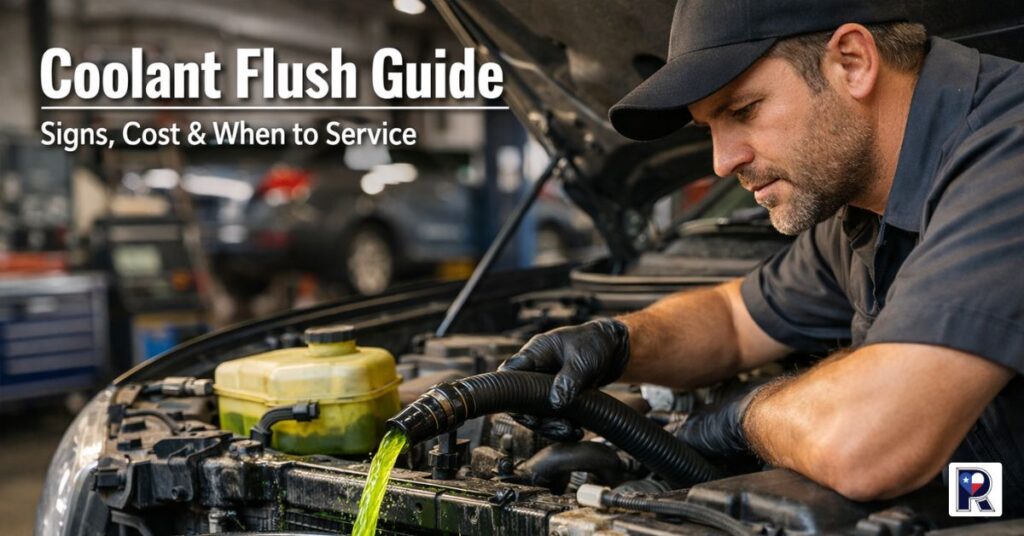
A coolant flush is one of those maintenance services many drivers put off until there is a problem. That is understandable—if the vehicle seems to be running fine, it is easy to assume the cooling system is fine too. But old, contaminated, or low-quality coolant can quietly reduce your radiator’s ability to control engine temperature. Over time, that can lead to overheating, corrosion, poor heater performance, and expensive repairs. For vehicle owners, fleet managers, and daily drivers, understanding when a coolant flush makes sense can help prevent bigger cooling system problems down the road.
What Is a Coolant Flush and Why Does It Matter?
A coolant flush is a service that removes old coolant from the radiator and cooling system so fresh coolant can be installed. The goal is not just to “change fluid.” It is to help the system manage heat properly, protect internal components, and reduce buildup that can affect circulation.
Coolant does several jobs at once:
- Helps regulate engine temperature
- Protects against corrosion inside the cooling system
- Supports heater performance
- Reduces the risk of scale, sludge, and contamination
When coolant breaks down, the system has to work harder. That can mean higher operating temperatures, more stress on parts, and a greater chance of cooling system trouble.
Coolant Flush vs. Topping Off Coolant
Topping off coolant and performing an engine coolant flush service are not the same thing.
Adding coolant only raises the fluid level. It does not remove dirty coolant, contamination, rust particles, or buildup already circulating through the system. A radiator flush or full cooling system service is more complete because it addresses fluid condition—not just fluid quantity.
If a vehicle has repeated coolant loss, overheating, or dirty fluid in the reservoir, simply topping it off may hide the real issue for a short time without solving it.
Signs Your Vehicle May Need a Coolant Flush
Drivers often notice warning signs before major failure happens. Common indicators include:
- Engine running hotter than normal
- Temperature gauge spikes or fluctuates
- Rusty, brown, or dirty-looking coolant
- Sweet smell that may point to a coolant leak
- Heater not blowing as warm as it should
- Visible corrosion around radiator components
- Repeated need to add coolant
- Signs of scale buildup or contamination
If you notice more than one of these symptoms, it is smart to have the cooling system checked. A car coolant flush may help, but the shop should also inspect for leaks, restrictions, or failing parts.
What Affects Coolant Flush Cost?
Coolant flush cost can vary depending on the vehicle and what the shop finds during inspection. The final price is usually influenced by:
- Vehicle make and model
- Cooling system capacity
- Type of coolant required
- Condition of the old coolant
- Whether extra diagnostic work is needed
- Signs of leaks, clogging, or component wear
- Whether related services are recommended
For example, radiator flush cost may be higher if the system shows heavy contamination, corrosion, or evidence of overheating. A vehicle that only needs routine maintenance is different from one that has been driven too long with degraded coolant.
How a Professional Shop Evaluates the Cooling System
A proper service should not stop at draining and refilling fluid. A professional shop usually looks at the full system to understand whether the coolant itself is the problem—or a symptom of something bigger.
That often includes checking:
- Coolant condition and contamination
- External or hidden leaks
- Radiator flow and heat transfer performance
- Hoses and clamps for wear or softness
- Thermostat-related symptoms
- Water pump warning signs
- Pressure-related issues
- Clogging, scale, or internal restriction
Related maintenance that may be recommended
Along with a coolant flush service, the shop may suggest:
- Hose inspection
- Radiator cap inspection
- Pressure testing
- Thermostat evaluation
- Reservoir inspection
- Cooling fan check
- Radiator maintenance if blockage or corrosion is present
This bigger-picture approach helps reduce the risk of repeat overheating after service.
You can also read: How to Tell If Your Car Needs a Radiator Flush
Why Hot Weather and Heavy-Demand Driving Matter
Cooling systems work harder in harsh driving conditions. Even if a vehicle seems fine on short trips, added strain can expose weak spots fast.
High-demand conditions include:
- Hot weather driving
- Stop-and-go traffic
- Towing or hauling
- Long highway runs
- Fleet use with frequent idling
- Heavy-duty work cycles
Under these conditions, marginal coolant quality can become a real problem. That is why many drivers searching for radiator flush near me are not just looking for routine maintenance—they are trying to avoid a breakdown during demanding use.
Common Mistakes Drivers Make
A lot of cooling system damage starts with small decisions that seem harmless at the time.
Common mistakes include:
- Waiting too long to service old coolant
- Ignoring overheating symptoms
- Mixing incompatible coolant types
- Using the wrong coolant for the vehicle
- Relying on temporary fixes after coolant loss
- Assuming a top-off solves everything
These mistakes can increase corrosion, reduce cooling efficiency, and put stress on the radiator, thermostat, water pump, and hoses.
When DIY Becomes Risky
Many online searches focus on terms like how to flush coolant, how to drain radiator fluid, how to flush a radiator, or how to drain engine coolant. It makes sense that drivers want to understand the process. But there is a big difference between learning how the service works and performing it safely on a modern vehicle.
DIY becomes risky when there are signs of overheating, repeated coolant loss, contamination, pressure problems, or suspected blockage. There is also risk in using the wrong coolant, missing trapped air in the system, or overlooking a thermostat or water pump issue.
If the vehicle has active symptoms, professional service is usually the smarter choice. Catching a cooling system problem early can help prevent much larger engine repair costs later.
Next Steps Checklist
If you think your vehicle may need attention, use this quick checklist:
- Check whether the temperature gauge has been running high
- Look for dirty, rusty, or sludgy coolant
- Pay attention to sweet smells or visible leaks
- Notice whether the heater output has changed
- Avoid ignoring repeated coolant loss
- Schedule an inspection if overheating has happened even once
- Ask whether a flush engine coolant service is enough or if other cooling system repairs are needed
FAQ
The cost depends on the vehicle, coolant type, system size, and whether the shop finds leaks, corrosion, or related cooling system issues. Routine maintenance usually costs less than service on a contaminated or overheating system.
Common signs include overheating, dirty coolant, a sweet odor, poor heater performance, visible corrosion, and temperature gauge fluctuations.
It depends on the vehicle and coolant type. Many manufacturers recommend service at set mileage or time intervals, but severe driving conditions may justify earlier inspection.
No. Adding coolant only raises the level. A coolant flush removes degraded fluid and helps address contamination inside the system.
Yes. Old coolant may lose protective qualities and allow buildup or corrosion that reduces heat transfer and coolant flow.
In many cases, yes. Fleet vehicles often deal with idling, heavier loads, and more frequent use, which can place extra demand on the cooling system.
If your vehicle is showing signs of overheating, dirty coolant, or repeated coolant loss, do not wait for the problem to get worse. A professional inspection can help determine whether a coolant flush is the right next step and whether the radiator or related components need attention.
Contact Permian Radiator to schedule a cooling system evaluation and get ahead of bigger repairs before they disrupt your day.


 ICONIER Digital Marketing Agency