
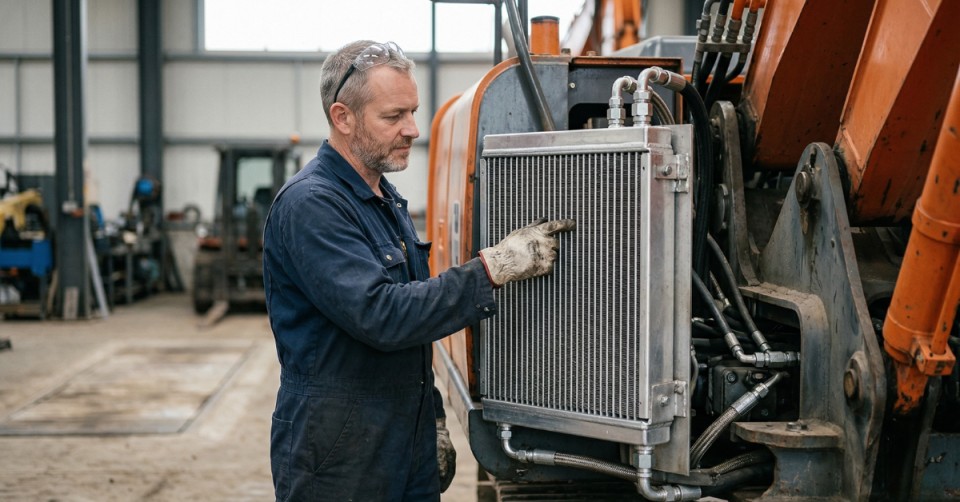
Every hydraulic system generates heat as a natural by-product of operation. Left unmanaged, that heat silently destroys seals, degrades fluid, and shortens equipment life. A hydraulic oil cooler is the frontline defense — and understanding how it works helps you choose the right one, maintain it properly, and avoid costly downtime.
What Is a Hydraulic Oil Cooler?
A hydraulic oil cooler is a heat exchanger designed to remove excess thermal energy from hydraulic fluid. As hydraulic systems operate — powering cylinders, motors, valves, and pumps — the fluid absorbs heat from internal friction and pressure drops. Without a cooler, that heat accumulates rapidly.
The cooler intercepts the heated oil on its return path to the reservoir, extracts the excess heat, and sends the fluid back into the circuit at a safe operating temperature — typically between 40°C and 60°C for most systems.
In simple terms: a hydraulic oil cooler does for your hydraulic system what a radiator does for a car engine.
Why Hydraulic Oil Temperature Control Matters
Temperature regulation is not optional — it’s essential. Here’s what overheating does to a hydraulic system:
- Viscosity drops: Hot oil becomes too thin to properly lubricate pumps, motors, and valves, accelerating wear.
- Seal failure: Seals and O-rings harden, swell, and crack when exposed to sustained high heat, causing leaks.
- Fluid breakdown: Above 60°C, hydraulic oil begins to oxidize. Fluid life can drop by up to 50% for every 10°C rise beyond that threshold.
- Reduced efficiency: Overheated systems lose power precision, causing sluggish response and inconsistent performance.
- Component damage: Prolonged overheating can warp pump housings, score cylinder bores, and lead to full system failure.
Keeping oil at the correct temperature is the single most impactful thing you can do to protect the long-term reliability of a hydraulic system.
How Does a Hydraulic Oil Cooler Work?
A hydraulic oil cooler operates on the principle of heat exchange — transferring thermal energy from hot hydraulic oil to a cooler medium (air or water). Here is the process step by step:
1. Hot Oil Enters the Cooler
Hydraulic fluid returning from actuators and motors flows into the cooler through an inlet port. At this stage, oil temperature may range from 70°C to over 90°C depending on operating load.
2. Oil Flows Through Heat Exchange Tubes
Inside the cooler, oil travels through narrow tubes made from aluminum or copper — both excellent heat conductors. This design maximizes the surface area that hot oil contacts, improving heat transfer efficiency.
3. Heat Transfers to the Cooling Medium
As oil flows through the tubes, heat passes through the tube walls into the surrounding medium:
- In air-cooled systems, a fan forces ambient air across metal fins, carrying heat away.
- In water-cooled systems, chilled water flows around the tubes in a closed circuit, absorbing the thermal energy.
4. Cooled Oil Returns to the System
After passing through the exchanger core, oil exits through the outlet port at a significantly lower temperature — often 20°C to 30°C cooler than when it entered — and returns to the hydraulic circuit ready for the next cycle.
5. A Bypass Valve Prevents Over-Cooling
A thermostatic bypass valve diverts cold oil around the cooler during start-up, preventing over-cooling until the system reaches its optimal operating temperature.
You can also read: Hydraulic Oil Cooler Repair: Common Issues and Solutions
Key Components of a Hydraulic Oil Cooler
|
Component |
Function |
|
Heat Exchanger Core |
Tubes and fins where heat transfer occurs |
|
Cooling Fan |
Drives airflow across fins in air-cooled units |
|
Inlet / Outlet Ports |
Connect the cooler to the hydraulic circuit |
|
Bypass Valve |
Prevents over-cooling during cold starts |
|
Cooling Fins |
Increase surface area for faster heat dissipation |
|
End Headers |
Distribute oil flow evenly across the tube bundle |
Types of Hydraulic Oil Coolers
Air-Cooled Oil Coolers
Air-cooled units use a fan to force ambient air across finned tubes. They are the most common type because they are simple to install, cost-effective, and require no water supply. They are available in AC-powered, DC-powered, and hydraulic motor-driven variants.
Limitation: Performance drops in very high ambient temperatures where the air-to-oil temperature difference is small.
Best for: Construction machinery, agricultural equipment, forestry attachments, and mobile hydraulic units.
Water-Cooled Oil Coolers
Water-cooled units use a supply of cool water or glycol coolant as the heat-absorbing medium. Water’s high heat capacity means these coolers offer superior thermal performance in a compact package.
Limitation: They require a reliable water supply and secondary cooling circuit, adding installation complexity.
Best for: Large industrial power units, injection molding machines, marine hydraulics, and enclosed environments where ambient air is already hot.
Warning Signs Your Cooler Is Failing
Catch problems early before they become expensive repairs. Watch for:
- Oil temperature consistently above 60°C during normal operation
- Sluggish actuator response or reduced power output
- Foaming, darkened, or burnt-smelling hydraulic fluid
- Visible fin clogging or physical damage on the cooler core
- Frequent seal failures or fluid leaks
Any of these symptoms warrants an immediate cooler inspection.
Essential Maintenance Tips
A well-maintained hydraulic oil cooler performs reliably for years. Follow these key practices:
Clean the cooling fins regularly. Dust, debris, and chaff clog fins and block airflow. Use compressed air or a soft brush. In dusty environments, inspect weekly.
Check hydraulic fluid condition. Look for discoloration, burnt smell, or cloudiness. Replace fluid on schedule — or sooner if contamination is detected.
Monitor operating temperature. Install a hydraulic temperature gauge if one isn’t already fitted. Log baseline readings so you can spot rising trends early.
Inspect hoses and connections. Look for cracking, abrasion, or weeping fittings. Even a small leak introduces air into the system and reduces cooling efficiency.
Test the bypass valve. A stuck-open bypass valve means oil permanently bypasses the cooler. Replace it if it fails to close at operating temperature.
Common Applications
Hydraulic oil coolers are used wherever hydraulic systems run under sustained load:
- Construction: Excavators, bulldozers, cranes, and skid steers
- Agriculture: Tractors, combine harvesters, and precision farming equipment
- Forestry: Mulchers, tree shears, and stump grinders
- Manufacturing: Injection molding presses, stamping machines, and CNC equipment
- Marine: Deck winches, steering systems, and hatch actuators
- Mining and Oil & Gas: High-pressure systems operating continuously under heavy loads
Conclusion
A hydraulic oil cooler is one of the most cost-effective components in any hydraulic system. By keeping oil at its optimal operating temperature, it protects every downstream component — from pumps and cylinders to seals and valves — extending equipment life and reducing maintenance costs.
Whether you’re selecting a cooler for new equipment or troubleshooting an overheating problem, the principle is simple: manage the heat, and you protect everything it would otherwise destroy.
Need professional cooling system service? The team at Permian Radiator specializes in vehicle cooling repair, radiator service, and hydraulic oil cooler solutions. If your equipment is running hot or overdue for an inspection, contact Permian Radiator today and let their experienced technicians keep your machinery running at peak performance.


 ICONIER Digital Marketing Agency