
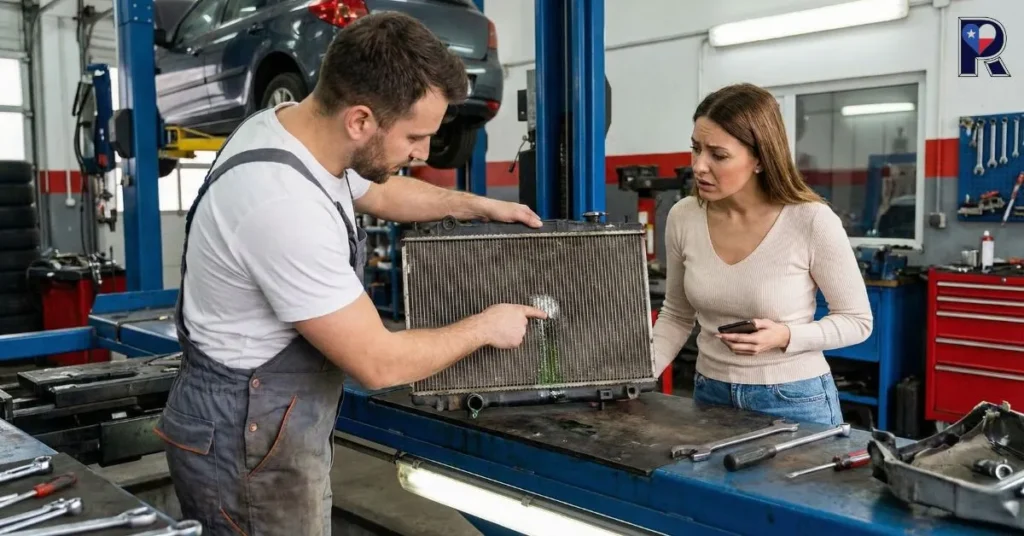
A radiator problem always seems to show up at the worst time right before a road trip, during stop-and-go traffic, or when Texas heat is doing its thing. And once you notice coolant on the ground or the temp gauge climbing, the big question hits fast: do you repair the radiator… or replace it?
The good news: you can usually make the right radiator replacement decision—especially if you’re getting advice or a quote from a radiator repair service texas drivers trust—by looking at a few real-world factors like type of radiator, extent of damage, corrosion risk, and total cost (not just today, but long-term). We breaks it down clearly so you know when to repair a radiator, when replacement is smarter, and what to do next.
Repair vs replacement: a quick decision checklist
Repair usually makes sense when…
- The leak is small and isolated (one seam, one tube, a pinhole) and the core is otherwise solid.
- The radiator is a repair-friendly type (often copper/brass; some aluminum can be repaired by the right shop).
- There’s no heavy internal corrosion (coolant still looks reasonably clean; no sludge).
- It’s a valuable/older vehicle where a correct repair or recore is better than a cheap replacement.
- You want to keep the original fitment on vehicles where replacements are hit-or-miss.
Replacement is usually the smarter move when…
- The radiator has multiple leaks, widespread fin/core damage, or cracked tanks.
- There’s internal corrosion and debris (rusty coolant, sludge, repeat clogging) that will keep coming back.
- The radiator is aluminum with plastic tanks and the tank/neck is cracked (often not worth “patching”).
- The car has overheated more than once, and you can’t risk another failure.
- You’ve tried “quick fixes” (stop-leak) and now the system is partially blocked (more on that below).
Step 1: Confirm the radiator is the real problem
A lot of “radiator issues” are actually hoses, clamps, the thermostat, the cap, the water pump, or the fan system. Before you spend money, narrow it down.
Safe at-home checks (no special tools)
- Look for external leaks: wet seams, crusty residue, spray marks near the fan.
- Check the coolant level in the reservoir (only when cool) and look for frequent drop-offs.
- Smell test: coolant has a sweet-ish odor; if you smell it after drives, something is leaking.
- Cabin heat clue: weak heat can point to low coolant or flow issues (not always radiator-only).
Safety note: never open a pressurized cooling system when hot—coolant can flash to steam.
Shop checks that actually answer the question
A good radiator shop (like Permian Radiator) typically uses:
- Cooling system pressure test (finds leaks fast)
- Dye testing (pinpoints seepage)
- Flow testing (catches internal restriction/clogging)
- Cap test (a weak cap can cause boil-over and false “overheating” symptoms)
Step 2: Grade the damage (what you’re really dealing with)
Leaks (small vs structural)
Small, repairable leaks: pinholes, one tube seep, minor seam leaks—these can sometimes be repaired depending on radiator type.
Replace-now leaks: split plastic tanks, cracked necks, repeated seam failure, or multiple leak points.
Clogs and restricted flow
A radiator can be clogged from:
- External debris (bugs/dirt blocking airflow)
- Internal scale/rust/sludge restricting coolant flow
External blockage can sometimes be cleaned; internal clogging often needs professional cleaning or replacement if severe.
Radiator corrosion and internal rust
This is where many “repairs” become temporary.
- Rusty coolant, sludge, floating debris = strong sign of internal corrosion
- Internal corrosion usually pushes the decision toward replacement, because the radiator can keep failing and contaminate the rest of the cooling system.
Impact damage (road debris / minor accidents)
Bent fins are common; crushed tubes or a distorted core usually means replace—especially if cooling performance drops under load/towing.
You can also read: What Do You Do About a Cracked Radiator?
Radiator materials matter: aluminium vs copper radiator repair
Your radiator’s construction heavily affects whether a repair will last.
Copper/brass radiators (often more repair-friendly)
- Typically easier to solder/braze and can sometimes be re-cored
- Great candidates for long-term repair when the tanks are still strong
Aluminum radiators (common on modern vehicles)
- Aluminum can be repaired, but it’s skill-dependent
- Many modern units use plastic end tanks; cracked plastic tanks/necks often don’t justify patch-style repairs
If you’re dealing with a Jeep radiator or any vehicle used for towing/off-road, the “repair vs replace” choice should account for vibration, heat load, and how hard the vehicle is worked.
Repair options: what a radiator shop can realistically do
If you’re searching car radiator repair service or auto radiator repairs near me, this is what a quality shop may offer (depending on radiator type):
Common professional repair routes
- Pressure test + pinpoint repair (seams, tube leaks)
- Weld/braze/solder repairs (material-dependent)
- Tank replacement (certain designs)
- Re-core (more common on copper/brass units and specialty radiators)
- Professional cleaning/flush when safe and appropriate
DIY “quick fixes” to avoid
- Stop-leak products can swell into a bigger issue by restricting flow and gumming up passages. If you used one, tell the shop—this affects what’s possible next.
- Epoxy patches may hold briefly, but they’re not a smart bet for pressurized, heat-cycling components.
Replacement options: what “replace” actually means
Replacement isn’t one-size-fits-all. Your choices usually look like this:
OEM-style replacement
- Best for daily drivers who want factory-like fitment and predictable performance.
Quality aftermarket replacement
- Can be cost-effective, but quality varies especially with plastic tanks and thinner cores.
Upgraded/heavy-duty radiator
Worth considering if you:
- Tow regularly
- Drive in extreme heat
- Have a history of overheating
- Run modified setups (bigger tires, added load, off-road use)
A good shop can guide you on what actually fits your driving conditions—not just what’s cheapest today.
Cost of radiator repair vs replace (and time in the shop)
People often ask: how much is a car radiator, and what’s the cost to replace a car radiator compared to repairing it?
Typical ranges (what affects your total)
- Repair may be cheaper when it’s a single, accessible leak and the radiator is repairable.
- Replacement typically costs more upfront, but may be the better value if failure risk is high.
Labor time: many radiators are roughly a 2–3 hour job, but some vehicles take longer depending on access.
So if you’re comparing auto radiator repair cost vs replacement, ask for a quote that includes:
- Parts quality level (OEM vs aftermarket vs upgraded)
- Labor time estimate
- Coolant type and refill
- Whether a flush is recommended (and why)
Vehicle-specific note: on some European vehicles, BMW radiator leak repair cost and replacement cost can swing higher than average because access and parts pricing vary a lot.
Mistakes that turn a repair into a replacement (plus maintenance tips)
Common mistakes
- Ignoring the first small leak until it becomes overheating
- Mixing coolant types or using straight water long-term
- Repeated stop-leak use
- Not addressing the cause (bad cap, fan issues, thermostat, clogged condenser/radiator face)
Radiator maintenance tips that prevent repeat failures
- Keep the radiator face clear of debris (especially if you drive rural roads)
- Use the correct coolant and change it on schedule (your owner’s manual is the boss)
- Fix small leaks early—cooling problems compound fast
- Dispose/recycle used antifreeze properly (don’t dump it)
FAQs
If the radiator shows internal corrosion, multiple leaks, or cracked plastic tanks, replacement is usually safer. If it’s a small, isolated leak on a repairable unit, a professional repair can be safe and cost-effective.
Minor repairs can sometimes be same-day. Replacement often takes a few hours of labor, but scheduling, parts availability, and vehicle design can add time.
Not a good idea. A “small” leak can become a rapid loss of coolant under pressure/heat, and overheating can cause major engine damage.
Not always—but many shops recommend flushing when there’s contamination, mixed coolant, sludge, or recurring overheating to protect the new radiator.
Overheating, repeated low coolant, visible leaks/residue, rusty/sludgy coolant, and poor heat output are big ones.
It can—if the core is healthy, corrosion isn’t advanced, and the repair matches the radiator’s material/design. The key is proper diagnosis and quality workmanship.
Final take: make the decision that prevents the next breakdown
If you’re stuck between radiator repair vs replacement, don’t guess—confirm the failure, grade the damage, and choose the option that reduces your risk (not just the option that’s cheapest today). A clean, isolated leak might be a solid repair. Widespread leaks, corrosion, or internal clogging usually points to replacement.
If you want a confident answer, Permian Radiator can pressure-test the system, identify the true source, and quote both paths so you can choose the smarter fix. Book an inspection or request a quote—before a small leak turns into an overheated engine.


 ICONIER Digital Marketing Agency