
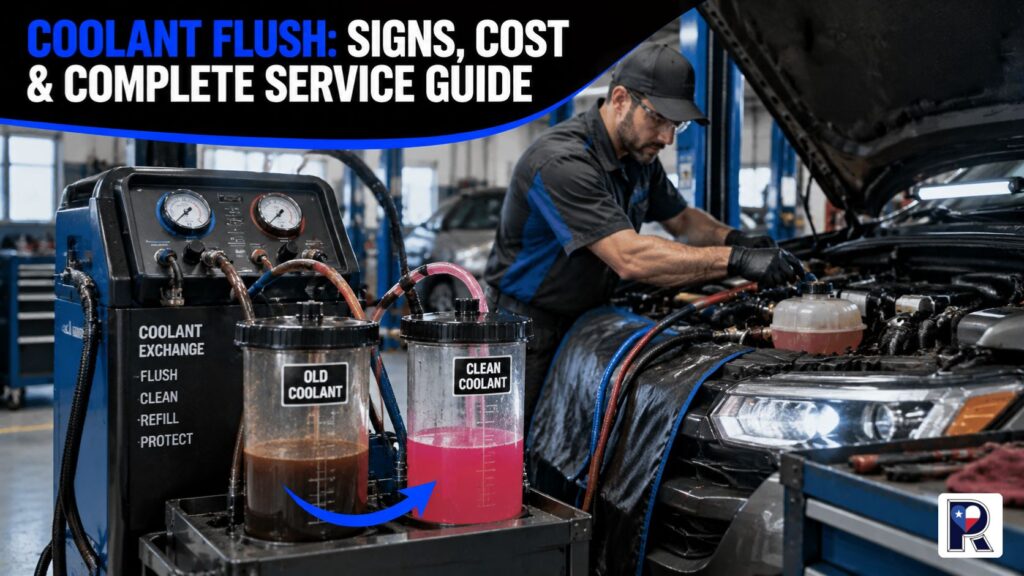
A coolant flush removes aging fluid and contamination from a vehicle’s cooling system before it is refilled with the correct coolant. It may be due when the manufacturer’s service interval arrives or when the coolant is rusty, cloudy, sludgy, or contaminated. However, a flush will not repair a leak, failed thermostat, damaged radiator, or other mechanical cause of overheating.
What is a coolant flush?
Engine coolant moves heat away from the engine and releases it through the radiator. It also provides freeze protection and contains additives that help protect metal surfaces inside the system.
Those additives gradually lose effectiveness. Sediment, corrosion particles, mixed fluids, and repair products can also collect inside radiator tubes, the heater core, hoses, and engine passages.
During a cooling system flush, the old fluid is removed and the system is refilled with coolant that meets the vehicle manufacturer’s specification. Depending on the vehicle and fluid condition, the shop may use a drain-and-fill procedure, an exchange machine, or several controlled rinse cycles.
The EPA notes that engine coolant loses some of its protection as contaminants accumulate and additives such as corrosion inhibitors become depleted.
In short: A flush replaces depleted fluid and removes contamination. It does not fix damaged cooling-system parts.
What are the signs you need a coolant flush?
The maintenance schedule is the first place to look. Symptoms can support the decision, but they should not replace a proper diagnosis.
The service interval has arrived
There is no universal replacement interval for every vehicle. Some coolants have much longer service lives than others, so follow the time and mileage requirements in the owner’s manual.
If the car’s maintenance history is unknown, have the fluid inspected rather than assuming its age from color alone.
The coolant looks rusty, muddy, or cloudy
Healthy coolant should look clean and consistent. Brown fluid, floating particles, gritty deposits, or sludge may indicate contaminated coolant, internal corrosion, or incompatible fluids that have been mixed.
Check only when the engine is completely cold. Never remove a radiator or pressurized reservoir cap from a hot engine.
The vehicle has an unknown coolant mixture
Coolant color is not a dependable way to identify its chemistry. Two products can look similar while meeting different vehicle specifications.
If the fluid type is unknown or incompatible products were mixed, a coolant change may be needed. The system should be refilled with the exact specification listed by the vehicle manufacturer, not whichever bottle matches the existing color.
Cabin heat has become weak or inconsistent
A partially restricted heater core can reduce warm airflow inside the cabin. Low coolant, trapped air, a faulty thermostat, or a blend-door problem can cause similar symptoms, so weak heat alone does not prove that a radiator flush is needed.
The temperature gauge moves more than usual
Temperature swings can be related to low fluid, trapped air, poor circulation, a restricted radiator, a failing thermostat, or a fan problem. The system should be inspected before any service is approved.
There is visible residue inside the reservoir
Flakes, oily film, gel-like deposits, or thick sludge need attention. Oil floating in the reservoir may point to an internal engine or heat-exchanger problem that a flush cannot correct.
In short: Dirty fluid and an expired service interval support flushing. Leaks, overheating, weak cabin heat, and oily coolant require diagnosis first.
When a coolant flush is not the right first step
A flush should not be sold as a cure for every cooling complaint. If the system cannot hold pressure or circulate coolant correctly, fresh fluid will not solve the fault.
Arrange a cooling system inspection first if you notice:
- Coolant repeatedly dropping below the correct level
- Wet areas beneath the vehicle
- Dried coolant residue around hoses or fittings
- Steam from under the hood
- Persistent white exhaust smoke
- Oil in the coolant
- Coolant mixed with the engine oil
- Rapid or repeated engine overheating
- A damaged hose, radiator, reservoir, or cap
- Cooling fans that do not operate
A coolant leak must be located and repaired before the system is refilled. A shop may perform a cooling system pressure test to find leaks that are not visible during a basic inspection.
Stop driving if the temperature warning appears, the gauge enters the hot zone, or steam is coming from the engine compartment. Continued operation can turn a cooling-system problem into major engine damage.
Coolant flush versus drain and fill
The right service depends on fluid condition, maintenance history, vehicle design, and manufacturer instructions.
Service | What it does | When it may make sense | Main limitation |
Drain and fill | Drains accessible coolant and replaces it with fresh fluid | Scheduled maintenance on a clean, regularly serviced system | Some old fluid remains in the engine, heater core, and low points |
Coolant flush | Removes more old fluid and contamination before refilling | Dirty fluid, unknown service history, incompatible coolant, or contamination | Not suitable as a substitute for repairing leaks or failed components |
Targeted cleaning | Cleans a specific restricted component, such as a heater core | A confirmed local restriction | Does not service the entire cooling system |
Diagnostic repair | Tests and repairs the actual fault | Leaks, overheating, pressure loss, oil contamination, or damaged parts | May involve additional parts and labor |
A full machine-powered or chemical flush is not automatically better. On an older, badly corroded system, a technician may recommend a gentler exchange, targeted cleaning, component repair, or replacement instead.
In short: A drain and fill suits many routine services. A full flush is more appropriate when more old fluid or contamination needs to be removed.
How much does a coolant flush cost?
A typical shop service may fall somewhere between about $80 and $250 based on recent national consumer estimates. A basic drain-and-fill usually sits toward the lower end, while a full exchange, dealership service, large-capacity system, or difficult bleeding procedure can cost more.
That range is only a planning figure, not a quote for coolant flush San Angelo TX service. The actual coolant flush cost depends on:
- Vehicle make, model, engine, and model year
- Total cooling-system capacity
- Required coolant specification
- Premixed versus concentrated coolant
- Drain-and-fill versus full exchange
- Number of rinse cycles required
- System contamination or stop-leak residue
- Access to drains and bleed points
- Vacuum-filling or scan-tool procedures
- Local labor rates
- Disposal and shop-supply charges
- Leaks or damaged parts found during inspection
Ask what the estimate includes. A low advertised price may cover only labor or a basic fluid exchange, while coolant, inspection, bleeding, disposal, and repairs may be separate.
In short: Expect the service method, coolant capacity, fluid specification, and system condition to affect the price. Get a vehicle-specific written estimate before authorizing work.
What should a professional coolant service include?
A proper service is more than opening a drain and pouring in new fluid. The exact steps depend on the vehicle, but the job should generally include:
- Confirm the service requirement
Check the maintenance schedule, coolant specification, and available service history. - Inspect the system when cold
Examine the radiator, reservoir, cap, hoses, clamps, water-pump area, and visible connections. - Check the existing fluid
Look for rust, sediment, oil, incompatible mixtures, or signs of stop-leak products. - Test when symptoms justify it
Pressure testing, cap testing, temperature checks, or additional diagnosis may be needed when coolant is disappearing or the vehicle is overheating. - Remove the old coolant safely
The technician selects a drain, exchange, or controlled flushing process suited to the vehicle and system condition. - Refill with the correct product
Coolant must meet the manufacturer’s specification. Color alone is not enough. - Bleed trapped air
Air pockets can interrupt circulation and cause unstable temperature readings. Some vehicles require specific bleed procedures or electronic pump activation. - Verify operation
The engine is brought to operating temperature while the technician checks coolant level, cabin heat, fan operation, leaks, and temperature behavior. - Handle the used fluid properly
Used antifreeze should not be poured onto the ground, into a floor drain, or down a sewer. EPA guidance calls for contained handling and appropriate recycling or disposal.
How often should coolant be flushed?
Follow the owner’s manual rather than a generic mileage rule. Coolant chemistry, engine design, materials, and service schedules differ too much for one interval to fit every car or truck.
Earlier service may be appropriate after:
- Incompatible coolant was added
- The system was contaminated
- Major cooling-system work was completed
- An overheating event damaged or degraded the fluid
- The vehicle’s service history cannot be verified
- Testing shows inadequate freeze or corrosion protection
Texas heat can expose a weak cooling system quickly, but hot weather does not cancel the manufacturer’s specifications. It makes accurate fluid level, proper circulation, clean heat-transfer surfaces, and working fans even more relevant.
Owners of diesel trucks and commercial equipment should follow the engine or equipment manufacturer’s coolant program. Heavy-duty systems may have different coolant chemistry, testing requirements, additives, filters, and maintenance intervals from passenger cars.
Expert tips before approving service
- Ask whether the shop recommends a drain-and-fill, fluid exchange, or full flush, and why.
- Request the exact coolant specification that will be used.
- Do not approve service based only on fluid color.
- Have recurring coolant loss diagnosed instead of repeatedly topping it off.
- Avoid mixing products unless their specifications are confirmed as compatible.
- Ask whether pressure testing and bleeding are included in the estimate.
- Keep the invoice so the coolant type, date, and mileage are documented.
- Do not open the cooling system while the engine is hot.
Frequently Asked Questions
Use the interval in the vehicle’s owner’s manual. Requirements vary by coolant formula, engine, and model year, so a universal two-year, five-year, or mileage rule can be wrong for your vehicle.
The terms are often used interchangeably. A proper service should address coolant throughout the engine, radiator, heater core, hoses, and related passages rather than cleaning only the radiator.
Only in limited cases, such as degraded fluid, trapped air, or a minor restriction. It will not repair a failed fan, thermostat, water pump, head gasket, leaking hose, or damaged radiator.
Many straightforward services can be completed within one or two hours. Multiple rinse cycles, difficult air bleeding, pressure testing, contamination, or related repairs can extend the time.
Do not use color as a compatibility guide. Match the specification in the owner’s manual or manufacturer service information because coolants of similar colors can use different additive packages.
It depends on the system’s condition. A badly corroded, leaking, or fragile system may need pressure testing, targeted cleaning, repair, or a controlled drain-and-fill instead of an aggressive machine or chemical flush.
The mechanical steps vary by vehicle, and trapped air can cause serious problems if the refill procedure is wrong. Used coolant is also toxic and requires contained collection and legal disposal, making professional service the safer choice for many owners.
Schedule a coolant flush in San Angelo
A coolant flush makes sense when the service interval has arrived or the fluid is degraded, contaminated, or incorrectly mixed. It is not a repair for every overheating complaint, which is why inspecting for leaks, restrictions, pressure loss, and failed parts should come first.
Permian Radiator handles automotive radiator service, cooling-system cleaning, flushing, inspection, and pressure testing in San Angelo, TX. If your coolant looks dirty, the temperature is unstable, or the vehicle’s maintenance history is unclear, call now, request a free quote, or schedule service before choosing the wrong procedure.


 ICONIER Digital Marketing Agency